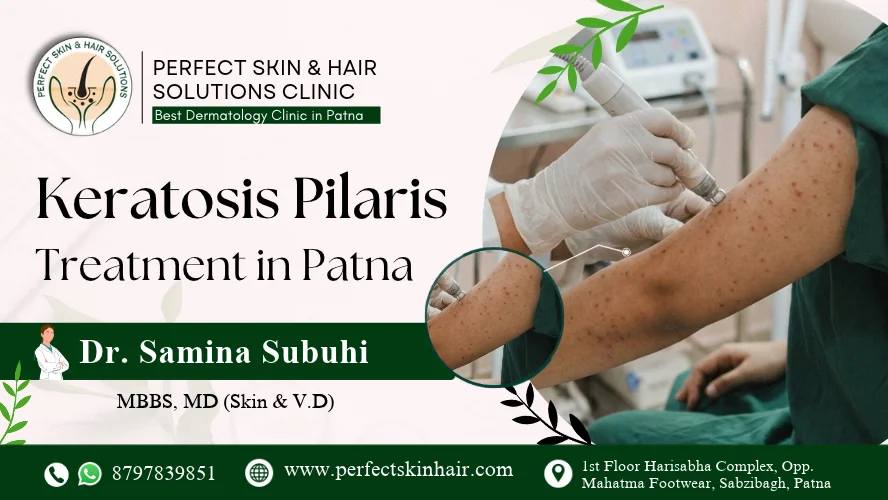
Keratosis pilaris is a very common skin condition that causes small, rough, sandpapery skin lumps and can occur on the upper arms, thighs, cheeks or buttocks. The skin can look uneven, dry and sometimes red, which can cause great distress to the sufferer.
Most products such as scrubs and moisturizers are promoted for keratosis pilaris but few people know if they are of any use. Learning about the condition and the various treatments available will help you manage it better.
If you are looking for a keratosis pilaris treatment in Patna, consulting a dermatologist is the first step towards finding the right solution. They can examine your skin, understand your specific condition, and suggest a treatment that best suits your skin type.
What Is Keratosis Pilaris?
Keratosis pilaris is a skin condition which is caused by keratin, a skin protectant, building up in the skin and forming small rough bumps around hair follicles. The bumps are typically flat and feel dry and rough to the touch.
They are usually the same color as the surrounding skin but can be white, reddish or brown in appearance depending on the individual’s skin type. Keratosis pilaris is most commonly found on the upper arms, thighs, cheeks and buttocks.
Although keratosis pilaris is not a contagious disease and does not come from poor hygiene, it can be a problem for some people. Typically, keratosis pilaris is harmless. Some people want to get rid of keratosis pilaris because of the skin’s texture, dryness or redness/irritation.
What Causes Keratosis Pilaris?
Keratosis pilaris occurs when excess keratin accumulates in the skin around hair follicles and hardens into plugs of keratin. While there is no known reason for excess keratin to form in the skin, there are several factors which can contribute to the occurrence of keratosis pilaris.
- Genetics: KP often runs in families, suggesting that genetic factors may increase the likelihood of developing the condition.
- Dry Skin: Dry skin can make KP bumps more visible, rough, and uncomfortable.
- Atopic Skin Conditions: People with eczema or atopic dermatitis may be more prone to developing KP.
- Seasonal Changes: Cold weather and low humidity can dry out the skin, making KP symptoms more noticeable.
- Hormonal Changes: Hormonal fluctuations during puberty or pregnancy may influence skin health and worsen KP symptoms.
Knowing these factors can help us identify the causes of keratosis pilaris and get appropriate skincare treatments as early as possible before it gets worse.
Signs and Symptoms of Keratosis Pilaris
Keratosis pilaris does not cause discomfort and normally is perceived by changes in skin’s surface. The main symptoms of KP are:
- Small, rough bumps around hair follicles, similar to goosebumps.
- The skin may be rough and feel like sandpaper, or it may be uneven.
- Bumps which are the same color of the skin as the rest of the body or are a reddish color.
- Affected areas may become noticeably dry, especially during winter.
- Some individuals may experience occasional mild itching.
- Hair follicles may become inflamed, resulting in slight skin redness.
The degree to which KP causes symptoms can vary greatly from person to person. Some may have only a few spots of KP, while others may have extensive areas of rough skin.
Keratosis Pilaris Treatment Options in Patna
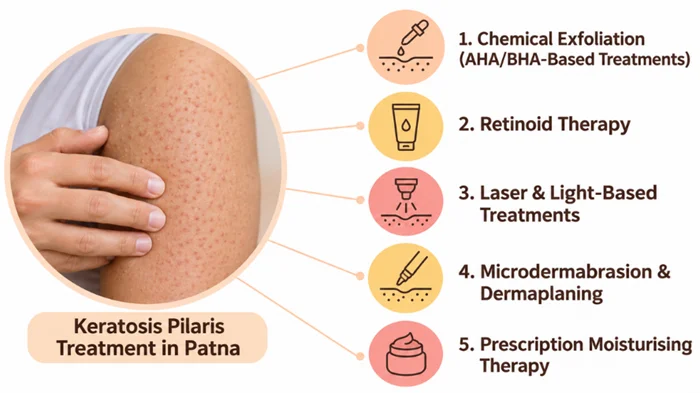
Keratosis pilaris treatment in Patna aims to remove excess keratin, moisturize the skin and make it smooth. The method of treatment depends on the severity of the skin condition, the skin type and the area affected.
1. Chemical Exfoliation (AHA/BHA-Based Treatments)
The use of chemical peel treatment, using AHAs such as lactic acid and/or glycolic acid, and/or BHAs such as salicylic acid, is common in the treatment of keratosis pilaris. These solutions work by loosening dead skin cells and thus reducing the buildup of keratin on the skin surface, creating rough, raised bumps.
Exfoliating ingredients such as alpha hydroxy acids (AHAs), lactic acid and glycolic acid, work on the surface of the skin to improve skin texture and appearance. Beta hydroxy acids (BHAs), like salicylic acid, also work on the skin surface but penetrate into hair follicle openings to break down dead skin cells and other materials that may become trapped.
Exfoliating ingredients are found in many creams and lotions, but users must be cautious not to use exfoliating products too frequently or at wrong strengths, as they can cause irritation, redness and dryness. A dermatologist can recommend the best exfoliating treatment for individual skin.
2. Retinoid Therapy
Topical retinoids can be of value in individual cases of keratosis pilaris and help to normalize epidermal skin cells and prevent keratin deposition around hair follicles.
These treatments can help smooth rough skin and remove the appearance of the keratosis pilaris bumps but can cause dryness, flakiness, redness and even irritation, most often from using the products too frequently or too soon and on sensitive skin types.
Retinoids can be very harsh on the skin so patients should be instructed by a dermatologist as to how to use them properly. Additionally, due to the risks of retinoids in pregnancy, women should be advised of the potential consequences of using them before confirming they are not pregnant or planning a pregnancy.
3. Laser & Light-Based Treatments
Laser and light-based therapies can help treat mild to moderate keratosis pilaris (KP). They are particularly useful when the condition is accompanied by redness or hyperpigmentation. These treatments may also be considered when topical treatments fail to provide satisfactory results.
There are a number of lasers and light-based treatments available that can reduce redness and help to treat pigmentation. Importantly, the treatment used will depend on the skin of the patient, their symptoms, their objectives and the dermatologist’s views.
Laser treatment is not always necessary for Keratosis Pilaris. A thorough skin assessment by the best female dermatologist in Patna will determine whether treatment is needed or not. It also helps evaluate whether the potential benefits outweigh the associated risks.
4. Microdermabrasion & Dermaplaning
Microdermabrasion is a superficial exfoliation of the upper layer of the skin, removing some of the dead skin cells. It can be considered for rough skin texture but is not usually recommended as a treatment for keratosis pilaris.
Though it is not a necessary treatment for this condition, there are other ways to improve the appearance of rough skin.
Dermaplaning, another form of superficial exfoliation, is used to remove dead skin cells and fine hair from the face. It is not typically used on areas of the body affected by KP, as this skin can become irritated and inflamed.
Choose your exfoliating treatments with care as they can exacerbate sensitive skin.
5. Prescription Moisturising Therapy
In dry skin with keratosis pilaris roughness and skin irritation can be relieved by Moisturising Therapy using preparations with urea, lactic acid etc.
Some of the moisturizing products, even those intended for keratosis pilaris, contain exfoliating agents that help remove the appearance of the follicular bumps while gentle enough for daily use.
A dermatologist can decide on a skin care product or mixture of products best suited to an individual’s skin. Depending on sensitivity and dry skin, a patient may benefit from using a moisturizing cream containing urea or lactic acid, for example, on a regular basis.
Personalized keratosis pilaris treatment helps address individual skin concerns, improve texture, and reduce rough bumps. Consult a dermatologist in Patna to find a treatment approach tailored to your skin type, symptoms, and condition severity.
How Much Does Keratosis Pilaris Treatment Cost in Patna?
Keratosis pilaris treatment cost in Patna starts around ₹300 to ₹1,000, depending upon the extent of skin affected by KP, area of skin affected and the method of treatment suggested by dermatologist.
Cost Breakdown:
- Chemical Exfoliation: Often around ₹2,000 – ₹8,000 per session for targeted areas, and up to ₹10,000 – ₹30,000+ for large or full-body peel protocols.
- Retinoid Therapy: Commonly around ₹1,000 – ₹5,000 depending on formulation, brand, and duration of use.
- Laser & Light-Based Treatments: Typically ₹5,000 – ₹20,000 per session, with multiple sessions usually needed for noticeable improvement.
- Microdermabrasion: Generally around ₹1,200 – ₹8,000 per session, depending on the clinic, device type (crystal, diamond, or hydra), and treated area.
NOTE: All prices are approximate estimates and may vary depending on the clinic, treatment area, and number of sessions required.
Several factors will influence the total cost to treat KP.
- Dermatologist consultation fees.
- The type of topical creams or prescription products recommended.
- The extent of the affected skin.
- Whether additional dermatological procedures are required.
- The number of sessions needed for selected treatments.
Keratosis pilaris requires ongoing skincare and thus as with any long-term skin care a single procedure is unlikely to cost enough to cover the full treatment required. Now, after finding the cost estimation, it’s also vital to get to know which dermatology clinic in Patna can provide you the best treatment.
Why Consult Dr. Samina Subuhi for Keratosis Pilaris Treatment in Patna?
Keratosis pilaris can be managed by knowing skin condition and treating on the basis of causes of skin problem.
At Perfect Skin & Hair Solutions Clinic, Dr. Samina Subuhi can make assessments of affected areas and perform keratosis pilaris treatment in Patna to improvise your skin texture.
If you are experiencing keratosis pilaris on your arms, you may notice symptoms such as dryness, redness, and rough skin. If these changes concern you, consulting a dermatologist can help identify your specific skin needs. They can recommend a suitable treatment plan based on your condition.
Also it helps in setting correct expectations regarding treatment along with using appropriate products consistently for best results to manage the condition of keratosis pilaris in Patna.
Conclusion
Keratosis pilaris or ‘chicken skin’ is one of the most common skin conditions and is known for causing rough patches, dry skin and uneven skin texture. Although keratosis pilaris is harmless, people suffering from it search for treatment to get rid of the unsightly changes on their skin.
We use a variety of methods to treat keratosis pilaris including chemical peels, retinoid, moisturizing treatments and even some of the dermatological procedures. The most suitable method for treating keratosis pilaris would depend on the severity of the skin and individual skin type.
If you are suffering from rough skin or chicken skin like bumps, you can consult Dr. Samina Subuhi at Perfect Skin & Hair Solutions Clinic for the best keratosis pilaris treatment in Patna.